On a quiet Saturday morning, you step out with your coffee and look across your yard. Instead of patchy grass and dandelion intrusions, you see a thick, soft carpet of green. It’s not just any lawn—it’s a clover lawn. More and more homeowners are choosing clover not only for its beauty but for what it represents: simplicity, sustainability, and a smarter way to care for outdoor spaces.
If the thought of mowing less, watering less, and using fewer chemicals sounds appealing, this guide is for you. Below, we’ll cover everything you need to know—from choosing the right variety of clover to preparing your soil, planting it the right way, and maintaining your new eco-friendly lawn with ease.
Rethinking the Traditional Lawn
For decades, a perfectly manicured grass lawn was seen as the gold standard of suburban beauty. But maintaining turfgrass often comes with high water bills, a regular diet of synthetic fertilizers, and a battle against pests and weeds—all of which take time, money, and an environmental toll.
Clover, once considered a weed, is now gaining new respect among landscapers and environmentally-conscious homeowners. Its benefits stretch far beyond aesthetics. Clover doesn’t just survive under challenging conditions—it thrives.
Why Clover Deserves a Spot in Your Yard
Let’s talk function. Clover is what’s called a nitrogen-fixer, which means it pulls nitrogen from the air and deposits it into the soil. That alone makes it incredibly valuable in any lawn setting, because nitrogen is one of the primary nutrients grass needs to stay green and healthy.
But the perks don’t stop there. Clover:
- Stays green longer during heatwaves and drought
- Requires little to no mowing
- Resists pests better than most grasses
- Feels cool and soft underfoot
- Provides natural habitat for pollinators like bees and butterflies
This isn’t just about less yard work—it’s about creating a healthier, more balanced environment right outside your door.
Choosing the Right Clover for Your Lawn
Before you spread any seed, it’s important to understand your options. There are two main varieties of clover typically used for lawns, and each serves a slightly different purpose.
White Dutch Clover (Trifolium repens)
This is the traditional choice and for good reason. White Dutch clover grows low—usually between 2 to 6 inches—and spreads modestly through creeping stems. It’s tough enough to handle moderate foot traffic, and its small white blossoms are bee-friendly.
Microclover
This is a newer cultivar, bred specifically for lawn use. The leaves are smaller, and it flowers less frequently. It also integrates well with turfgrass, making it a great option if you want the appearance of a classic lawn but with the resilience of clover.
Prepping the Ground for Clover Success
Jumping into a new lawn project without proper prep is like trying to paint over dirty walls. The results will never quite meet your expectations. Start by assessing the condition of your current lawn.
If you’re replacing turf:
- Mow it short—as close to the soil as you can get.
- Rake out debris, thatch, and existing weeds.
- Consider smothering the area with cardboard or plastic for a few weeks if the lawn is particularly stubborn.
For bare or new soil:
- Loosen the top few inches using a rake or tiller.
- Remove rocks, roots, and clumps.
- Water the area lightly before planting to help the seed settle.
Timing Is Everything: When to Plant Clover
Planting clover isn’t complicated, but timing plays a big role in how well it establishes. Aim for:
- Spring planting: Once soil temps are consistently above 50°F, ideally between 60–70°F.
- Fall planting: At least 6 weeks before your first hard frost.
Seeding Rates Matter
- For a full clover lawn: ½ to 1 lb of seed per 1,000 sq. ft.
- If mixing with grass: ¼ lb per 1,000 sq. ft.
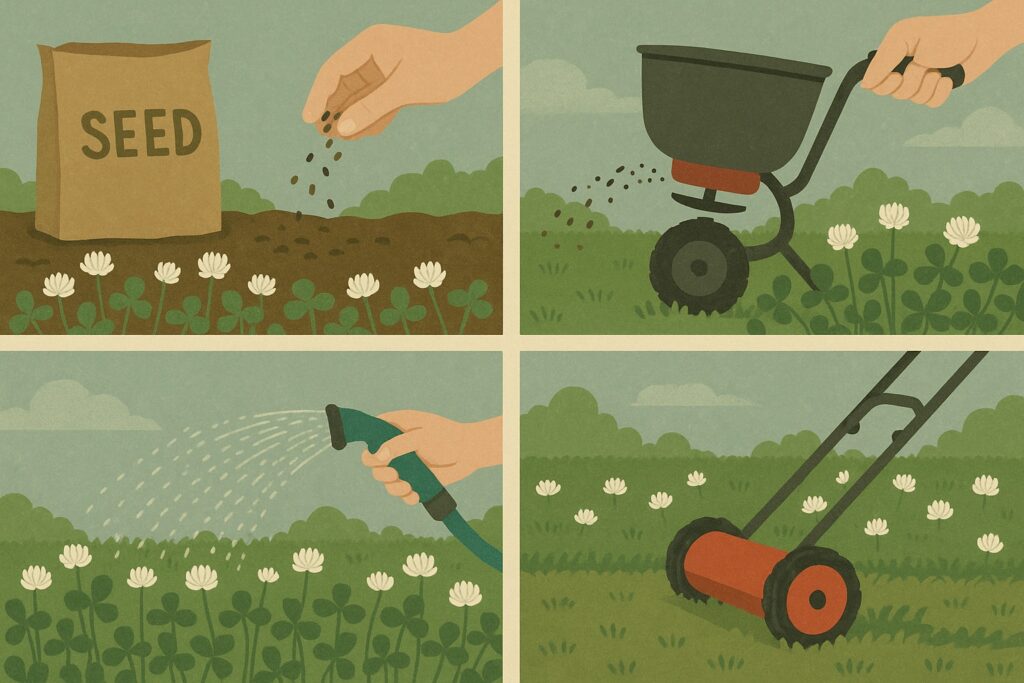
Use a seed spreader or mix the seed with sand or sawdust to distribute evenly. Rake gently to press the seed into the soil, but don’t bury it—clover needs light to germinate.
Establishing Your Clover Lawn: Water, Wait, Watch
Your job after planting is to create the right conditions for the seed to sprout and take hold.
- Water lightly every day for the first 7–10 days.
- Once germination occurs (usually within 5–10 days), cut watering back to every few days.
- After three weeks, most clover varieties are well on their way to becoming self-sufficient.
What Maintenance Looks Like for Clover Lawns
One of the biggest selling points of a clover lawn is how little it demands once established. Here’s what minimal maintenance actually looks like:
Watering
Clover is more drought-resistant than turfgrass. Once mature, it generally only needs water during prolonged dry spells.
Mowing
Many homeowners choose not to mow clover at all. But if you prefer a tidier appearance or want to reduce blooming (and bee activity), mowing every 3–4 weeks is usually sufficient.
Fertilizing
Skip synthetic fertilizers altogether. Clover feeds itself and surrounding plants by fixing nitrogen into the soil. If you’re feeling generous, a once-a-year dose of compost or compost tea can give it a natural boost.
Weed Control
The dense growth of clover crowds out many weeds naturally. If any sneak through, hand-pulling or spot-treating with natural solutions like vinegar works well. Avoid broadleaf herbicides—they’ll kill your clover too.
Dealing with Bees, Pets, and Other Concerns
What About Bees?
Clover flowers attract pollinators—great for the ecosystem but something to consider if allergies or young children are a concern. You can manage flowering by mowing regularly or opting for microclover.
Is Clover Pet-Friendly?
Yes, clover is safe for pets and stands up better to dog urine than grass. It’s less likely to develop unsightly yellow spots and generally recovers more quickly from wear and tear.
A Greener Lawn, A Better Yard
Choosing to grow a clover lawn isn’t just about reducing your weekend workload—it’s a small, meaningful step toward environmental stewardship. You’re creating a lawn that works with nature, not against it. And in the process, you’re cutting down on water use, eliminating harmful chemicals, and building healthier soil.
Clover lawns offer a striking, green aesthetic that stays vibrant even under tough conditions. Whether you’re transitioning a full lawn or incorporating clover into existing turf, the benefits are real, and the results are rewarding.
Final Takeaway
If you’re ready to trade in your high-maintenance grass for something greener, softer, and smarter, clover might just be the groundcover you’ve been looking for. With the right prep and care, you’ll enjoy a beautiful lawn that’s easy on the eyes—and the environment.
The written content on this page was generated by ChatGPT.

Comments