Starting a lawn from seed is one of those projects that teaches patience quickly. You spread the seed, water faithfully, and then wait—sometimes longer than expected. In many cases, the issue isn’t the seed quality but the soil conditions. Grass seed needs a supportive environment to germinate, and without the right foundation, even premium seed struggles to establish. That’s where natural lawn seed starters and germination boosters make a significant difference.
Natural seed starters don’t just push grass to grow quickly—they improve the soil itself. Instead of relying on synthetic chemicals that provide short bursts of nutrients, organic boosters work with nature by enriching soil structure, supporting beneficial microbes, and helping roots develop properly. The result is a lawn that not only germinates faster but also becomes thicker, healthier, and more resilient over time.
This guide explores the most effective natural lawn seed starters and germination boosters, how they work, and how to use them to achieve reliable results.
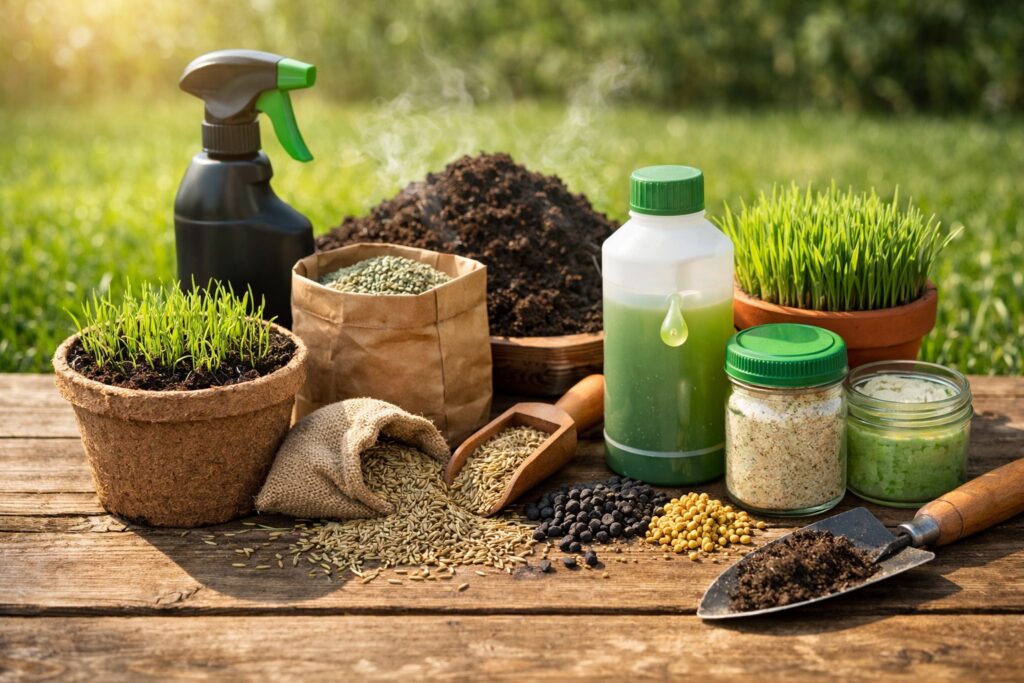
Understanding What Grass Seed Really Needs to Germinate
Before choosing a seed starter, it’s important to understand what happens during germination. Grass seed begins to grow when it absorbs moisture and activates its internal energy reserves. However, successful germination depends heavily on soil conditions.
Seeds need:
- Consistent moisture
- Access to oxygen
- Loose, well‑structured soil
- Available nutrients
- Beneficial microbial activity
Poor soil conditions, such as compaction, dryness, or low organic matter, can delay or prevent germination. Natural seed starters help correct these issues and create the ideal environment for grass to establish.
Compost: The Foundation of Successful Lawn Germination
Compost is widely considered the best natural seed starter available. It contains decomposed organic matter rich in nutrients and beneficial microorganisms. More importantly, compost improves soil structure, which allows water and oxygen to reach developing roots.
One of the biggest advantages of compost is its ability to retain moisture. Grass seed requires consistent hydration during germination, and compost helps prevent soil from drying out too quickly.
Applying compost also improves long‑term soil fertility. Even after grass has germinated, compost continues feeding the soil naturally.
How to use compost effectively:
Spread a thin layer, about one‑quarter to one‑half inch thick, over the soil surface before seeding. Lightly work it into the top layer if possible. After spreading grass seed, water gently to keep the area consistently moist.
Compost is especially helpful for clay soils, sandy soils, and areas where grass has struggled to grow.
Worm Castings: Natural Nutrient Powerhouse
Worm castings are a highly effective natural germination booster that improves both soil quality and seed performance. These castings are produced by earthworms and contain concentrated nutrients in a form that plants can absorb easily.
In addition to nutrients, worm castings introduce beneficial microbes into the soil. These microorganisms help break down organic matter and make nutrients more accessible to developing grass seedlings.
Grass grown in soil enriched with worm castings often develops stronger roots and establishes faster.
Key advantages include:
- Improved germination speed
- Stronger early root growth
- Better soil moisture retention
- Increased microbial activity
Worm castings can be spread directly over soil before seeding or lightly applied afterward.
Humic Acid: Unlocking Nutrients in the Soil
Humic acid is a natural substance formed during the decomposition of organic material. It plays an important role in improving soil fertility and helping plants absorb nutrients.
Many soils contain nutrients that grass cannot easily access. Humic acid helps release these nutrients, making them available to young seedlings.
It also improves soil structure by increasing its ability to hold water and nutrients. This creates a more stable environment for grass seed germination.
Humic acid is available in liquid or granular form and can be applied before or immediately after seeding.
Seaweed and Kelp Extract: Stimulating Early Growth Naturally
Seaweed and kelp extracts have been used in agriculture for decades because of their ability to stimulate plant growth. These natural products contain trace minerals, amino acids, and compounds that encourage root development.
Unlike synthetic fertilizers, seaweed extract does not overwhelm young plants. Instead, it gently supports early growth and improves stress tolerance.
Grass treated with seaweed extract often establishes faster and develops deeper roots, which helps it survive heat and drought later.
Liquid seaweed extract can be sprayed directly onto soil or newly seeded areas.
Compost Tea: Feeding Soil Biology
Compost tea is a liquid created by soaking compost in water. This process extracts beneficial microbes and nutrients, creating a solution that can be applied directly to soil.
One of the main benefits of compost tea is its ability to increase microbial activity. Healthy soil depends on microorganisms that break down organic matter and support plant growth.
When applied to newly seeded areas, compost tea helps create a living soil environment that encourages faster germination and stronger grass.
Compost tea can be sprayed before or after seeding and reapplied periodically.
Biochar: Improving Soil Structure and Moisture Control
Biochar is a form of charcoal made from organic materials. It improves soil structure by increasing porosity, which allows air and water to move more freely.
One of biochar’s most valuable qualities is its ability to retain moisture. This is especially helpful during the critical germination phase when seeds must remain consistently moist.
Biochar also provides a habitat for beneficial microbes, which contributes to long‑term soil health.
For best results, biochar should be mixed with compost before application.
Mycorrhizal Fungi: Supporting Root Development
Mycorrhizal fungi form a natural partnership with plant roots. These fungi extend into the soil and help roots absorb water and nutrients more efficiently.
This relationship significantly improves root development, which leads to stronger and more resilient grass.
Grass grown with mycorrhizal fungi often establishes faster and requires less fertilizer over time.
These fungi are available in powder or granular form and can be applied during seeding.
Coconut Coir: Maintaining Ideal Moisture Levels
Coconut coir is made from coconut husks and is commonly used to improve soil moisture retention. It acts like a sponge, helping soil stay evenly moist without becoming waterlogged.
Maintaining consistent moisture is one of the most important factors in seed germination, and coconut coir helps achieve that balance.
It is particularly useful in sandy soils or hot climates where moisture evaporates quickly.
Coir can be spread lightly over seeded areas to protect and support germination.
Combining Natural Boosters for Best Results
Using multiple natural seed starters together often produces the best outcome. Each product contributes different benefits, and combining them creates ideal soil conditions.
A highly effective combination includes:
- Compost for nutrients and soil improvement
- Worm castings for microbial activity
- Humic acid for nutrient absorption
- Mycorrhizal fungi for root development
This approach improves germination speed and ensures long‑term lawn health.
Proper Application Techniques Matter
Even the best seed starters will not perform well without proper application.
Follow these steps for optimal results:
Begin by loosening the top layer of soil to improve airflow and water penetration. Apply compost or worm castings evenly across the area. Spread grass seed uniformly and ensure good seed‑to‑soil contact. Apply liquid boosters such as humic acid or seaweed extract. Water gently and keep soil consistently moist during germination.
Avoid overwatering, as excessive moisture can prevent oxygen from reaching seeds.
Timing Makes a Difference
The best time to use natural lawn seed starters depends on your climate and grass type. In most regions, early fall provides ideal conditions because temperatures are moderate and moisture levels are more consistent.
Spring is also suitable, although hotter weather may require more frequent watering.
Avoid seeding during extreme heat or freezing conditions.
Long-Term Benefits of Natural Seed Starters
Natural lawn seed starters do more than improve germination. They strengthen soil structure, support beneficial microbes, and improve overall lawn health.
Over time, lawns grown with natural boosters require less fertilizer, resist disease more effectively, and tolerate environmental stress better.
Healthy soil creates healthy grass. By focusing on natural soil improvement, you build a lawn that lasts.
Final Thoughts
Growing a lawn from seed does not have to rely on synthetic fertilizers or harsh chemicals. Natural seed starters like compost, worm castings, humic acid, and seaweed extract provide everything grass needs to establish successfully.
These natural boosters improve soil health, accelerate germination, and promote deeper root growth. More importantly, they create a sustainable foundation that supports long‑term lawn health.
With proper preparation and the right natural products, you can achieve a thick, vibrant lawn that continues to improve season after season.
The written content on this page was generated by ChatGPT.

Comments