Maintaining a healthy, vibrant lawn isn’t just about mowing and watering. Over time, the soil beneath your grass becomes compacted, reducing its ability to absorb air, water, and essential nutrients. When this happens, even the most well-maintained lawns can start to look tired and thin. That’s where aeration comes in.
Traditionally, homeowners and lawn care professionals have turned to core aeration to resolve soil compaction. But in recent years, liquid aeration has been making waves as a gentler, less invasive alternative. So which method is better? Let’s take a deep dive into how each one works, their benefits and drawbacks, and how to decide which option is right for your yard.
Understanding the Role of Aeration
Think of your lawn like a sponge. When it’s loose and well-structured, it easily soaks up water, air, and nutrients. But when compacted, it acts more like concrete — water pools on the surface, roots can’t expand, and your grass struggles.
Aeration is the process of loosening compacted soil, which allows your lawn to breathe again. Done properly, it leads to stronger root systems, improved nutrient absorption, better drainage, and even enhanced drought tolerance.
What Is Core Aeration?
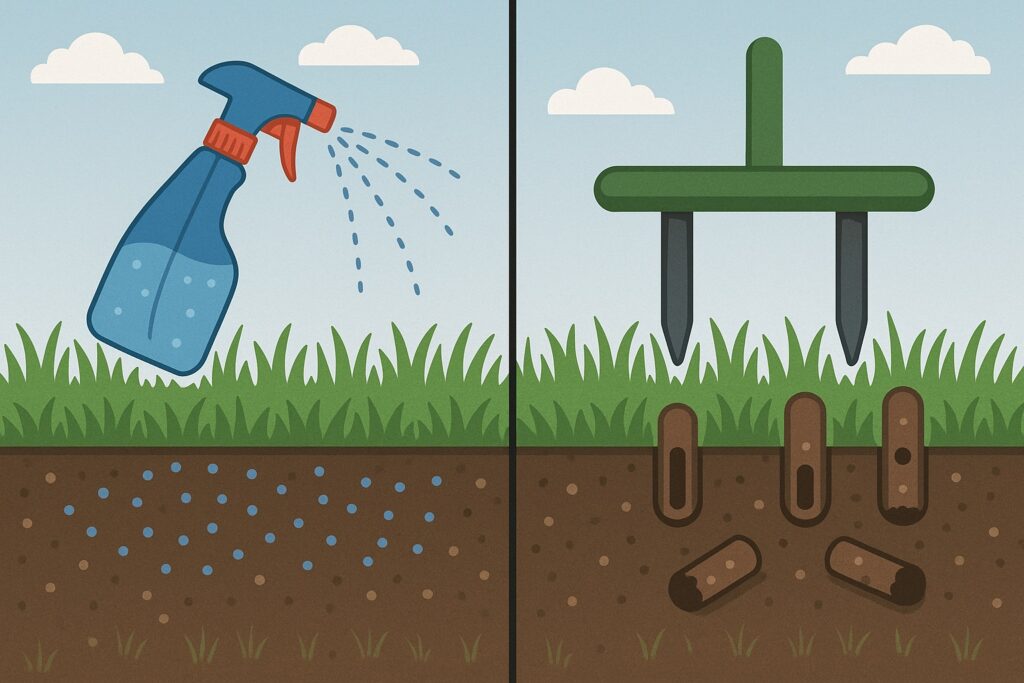
Core aeration involves using a machine with hollow tines to mechanically remove small plugs of soil from your lawn. These cores, typically two to three inches long, are left on the surface to decompose and return nutrients to the soil.
Core Aeration Pros:
- Reduces significant soil compaction
- Encourages deeper root growth
- Improves penetration of water, oxygen, and fertilizer
- Helps break down thatch buildup when paired with dethatching
Core Aeration Cons:
- Leaves temporary holes and soil plugs on your lawn
- Requires specialized equipment or professional service
- Not ideal in very dry or overly wet conditions
While messy at first, core aeration provides immediate results, particularly for lawns with dense clay soils or heavy foot traffic.
What Is Liquid Aeration?
Liquid aeration uses a chemical or organic solution, often containing ingredients like humic acid, amino acids, and biostimulants, to break up compacted soil at a microscopic level. Instead of physically removing soil, it works by loosening soil particles and increasing microbial activity.
You apply liquid aeration using a garden sprayer or hose-end applicator, much like you would with lawn fertilizer.
Liquid Aeration Pros:
- No disruption to the appearance of your lawn
- Easy to apply, DIY-friendly
- Reaches deeper soil layers over time
- Can be applied throughout the growing season
Liquid Aeration Cons:
- Results are more gradual and may take weeks to notice
- Less effective on severely compacted soil
- Multiple applications may be needed for optimal impact
- Does not address thatch buildup
Liquid aeration is ideal for homeowners seeking a natural, low-effort approach to lawn maintenance, especially in lighter soils or as ongoing preventative care.
Comparing Core and Liquid Aeration Side-by-Side
| Feature | Core Aeration | Liquid Aeration |
|---|---|---|
| Method | Removes physical soil plugs | Loosens soil through liquid solution |
| Best For | Heavily compacted, clay soils | Light to moderate compaction |
| Soil Penetration | Shallow but immediate | Deep, gradual |
| Impact on Thatch | Reduces thatch | No impact |
| Application Tools | Aerator machine | Garden hose or sprayer |
| Disruption to Lawn | Visible plugs and holes | No visible impact |
| Time to Results | Instant | Gradual over weeks |
| Cost | Higher (labor or rental fees) | Lower (DIY-friendly) |
Choosing the Right Method for Your Lawn
There’s no universal answer because your lawn’s specific conditions should guide your decision. If your yard has dense clay soil, sees a lot of foot traffic, or hasn’t been aerated in years, core aeration is likely your best bet. It delivers quick, reliable results and is especially beneficial when overseeding or applying fertilizer.
However, if your lawn is already in decent shape and you’re focused on long-term soil health with minimal disruption, liquid aeration offers a convenient alternative. It’s also an excellent option if you’re practicing organic or eco-conscious lawn care.
Can You Use Both Methods Together?
Absolutely. In fact, many lawn care pros recommend doing just that. Core aerate once or twice per year, then follow up with liquid aeration every 4–6 weeks to keep the soil loose and healthy. This combination tackles both immediate compaction and ongoing soil structure improvement.
In the debate between liquid aeration vs. core aeration, the real winner is your lawn—as long as you’re doing something to relieve soil compaction.
- Use core aeration for serious compaction and quick fixes.
- Choose liquid aeration for lighter, ongoing care with zero mess.
- Or combine both for the healthiest results, especially in seasonal lawn care plans.
A beautiful, thriving lawn doesn’t come from watering and mowing alone. By paying attention to what’s happening beneath the surface, you give your grass the foundation it needs to grow strong and stay green all year long.
If you’re in Woodstock, GA and considering either method, talk to a local lawn care expert who understands your region’s unique soil and climate. A well-aerated lawn is just the beginning of a healthier yard.
The written content on this page was generated by ChatGPT.

Comments