Most homeowners know the struggle of compacted soil and thinning grass. You water regularly, fertilize on schedule, and still, the lawn seems tired—almost like it can’t breathe. For decades, the go-to solution has been core aeration: pulling small plugs of soil to let air, nutrients, and water reach the roots. While effective, it’s messy, labor-intensive, and often requires professional equipment.
That’s where liquid aeration steps in. It’s a modern, eco-friendly alternative that promises to rejuvenate your lawn without leaving behind a battlefield of soil plugs. Rather than physically puncturing the ground, liquid aeration uses scientifically formulated natural compounds to loosen compacted soil and boost the root environment—no heavy machinery required.
What Exactly Is Liquid Aeration?
Liquid aeration works on the principle of improving soil porosity chemically and biologically rather than mechanically. These products are typically made up of natural surfactants, humic and fulvic acids, seaweed extracts, and beneficial microbes. Together, they help break down compacted soil, allowing oxygen, water, and nutrients to penetrate more deeply.
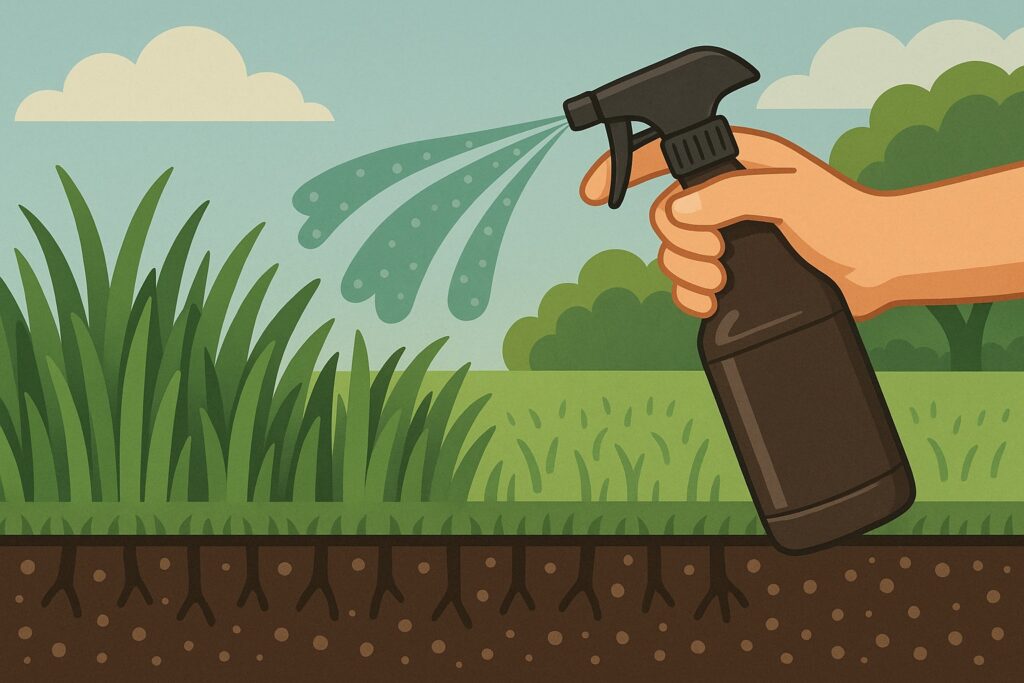
When applied through a sprayer or hose-end attachment, the solution soaks into the soil, where it begins to reduce surface tension. The surfactants allow water to move freely between soil particles, while humic acids bind nutrients that might otherwise wash away. Seaweed and kelp extracts deliver trace minerals and bio-stimulants that encourage stronger root growth and microbial activity.
Over time, this combination helps create a living soil environment—one where beneficial microbes thrive and roots grow deeper and stronger. It’s a slow but steady improvement that doesn’t require tearing up your lawn.
How Liquid Aeration Differs from Core Aeration
Core aeration physically removes plugs of soil to relieve compaction. It’s immediate and effective but also disruptive. You often have to clean up soil debris afterward, avoid walking on the lawn for several days, and sometimes reseed bare patches.
Liquid aeration, by contrast, takes a gentler approach. The treatment seeps into every corner of your yard—even those that are hard to reach with traditional machines—creating uniform soil improvement without any visible damage. Because it’s applied as a spray, every inch of your lawn can be covered evenly.
It’s not a perfect substitute for mechanical aeration in extreme cases, but for moderately compacted lawns or eco-conscious homeowners, it’s an ideal balance of effectiveness and convenience.
The Science Behind Liquid Aeration Ingredients
Let’s take a closer look at what’s inside most liquid aeration products—and how each ingredient contributes to healthier soil.
1. Surfactants
These are compounds that reduce surface tension in the soil, allowing water to spread and absorb more effectively. They help prevent runoff and ensure deeper hydration.
2. Humic and Fulvic Acids
Extracted from decomposed organic matter, these natural acids improve soil structure, increase nutrient availability, and stimulate root growth. They also feed soil microbes, which are essential for long-term lawn health.
3. Seaweed or Kelp Extracts
Kelp is rich in micronutrients, plant hormones, and amino acids that support root development and stress resistance. It acts as a natural growth enhancer without introducing synthetic chemicals.
4. Beneficial Microbes
Some liquid aeration formulations include living organisms that break down thatch layers and help recycle organic material into usable nutrients. This contributes to a self-sustaining, fertile soil ecosystem.
The Benefits of Liquid Aeration
1. No Damage or Cleanup
Unlike core aeration, there are no plugs of dirt scattered across your lawn. Your yard stays neat, and you can continue regular activities immediately after application.
2. 100% Lawn Coverage
Because liquid aeration is sprayed evenly, it reaches areas that mechanical aerators often miss—such as narrow corners, slopes, and edges near walkways.
3. Improved Water and Nutrient Flow
By loosening compacted soil and improving its structure, these products make it easier for water and nutrients to reach the root zone, resulting in thicker, more vibrant grass.
4. Eco-Friendly Lawn Care
Most liquid aeration products use natural or organic-based ingredients that enhance soil life rather than disrupt it. This makes them an ideal option for homeowners pursuing sustainable or chemical-free lawn care.
5. Safe for Families and Pets
Because these solutions avoid harsh synthetic compounds, they’re generally non-toxic and safe for kids and pets to be around after drying.
Potential Drawbacks to Consider
It’s important to be realistic—liquid aeration isn’t a one-size-fits-all solution.
- Severe Compaction Needs Mechanical Aeration: If your lawn’s soil is extremely dense or clay-heavy, a physical core aeration might be necessary before switching to liquid methods.
- Results Take Time: You won’t see instant changes. Improvements often become noticeable after a few weeks or multiple treatments.
- Variable Effectiveness: Some cheaper products contain mostly water or ineffective concentrations of active ingredients. Choosing a reputable brand is crucial.
Recommended Liquid Aeration Products
Here are some well-regarded options used by homeowners and lawn care professionals alike:
- N-Ext Air-8 Liquid Aeration Bio-Stimulant – A trusted product made with humic and fulvic acids, designed for deep soil conditioning.
- Southland Organics Revival Liquid Aerator – Organic-based formula that restores compacted soils naturally.
- PetraTools PetraMax Liquid Aerator 0-0-5 – A balanced solution combining potassium and soil enhancers for lawn vitality.
- SOFTSOIL Liquid Lawn Treatment – Works well on clay soils, helping to loosen compacted areas effectively.
- Scotts Liquid Turf Builder – While not a pure aeration product, it improves nutrient uptake and soil softness.
Each of these options varies in concentration and price, so consider your lawn’s condition and size before purchasing.
How to Apply Liquid Aeration Correctly
- Mow and Clear the Lawn – Trim your grass and remove debris for even coverage.
- Water Lightly Before Application – Moist soil absorbs the product better.
- Spray Evenly – Use a hose-end sprayer or backpack sprayer to apply the solution across the lawn.
- Irrigate Lightly After Application – This helps move the solution deeper into the soil.
- Repeat as Needed – For best results, apply once in spring and once in fall.
Best Time to Apply in Woodstock, GA
In regions like Woodstock, Georgia, where the soil tends to be clay-heavy and compact, liquid aeration can be particularly effective. The best times for application are early spring (March–April) and early fall (September–October)—when the grass is actively growing but not under extreme stress from heat or cold.
If your lawn experiences heavy foot traffic or frequent use, combining one annual core aeration with one or two liquid aeration treatments can create excellent long-term results.
Final Thoughts: Is Liquid Aeration Worth It?
Liquid aeration represents a shift toward smarter, eco-friendly lawn care. It’s clean, efficient, and safe for your family and the environment. While it may not completely replace traditional aeration for every yard, it’s an excellent alternative for most homeowners—especially those seeking an easy, low-impact way to revitalize compacted soil.
A greener, healthier lawn doesn’t always require brute force. Sometimes, the smartest solutions come in liquid form.
The written content on this page was generated by ChatGPT.

Comments