If your lawn looks tired no matter how often you mow, water, or fertilize, the problem might not be your grass—it’s the soil underneath. The foundation of any healthy, green lawn lies in the condition of its soil. Over time, soil can become compacted, depleted of organic matter, and stripped of beneficial microbes. That’s when organic soil conditioners come into play.
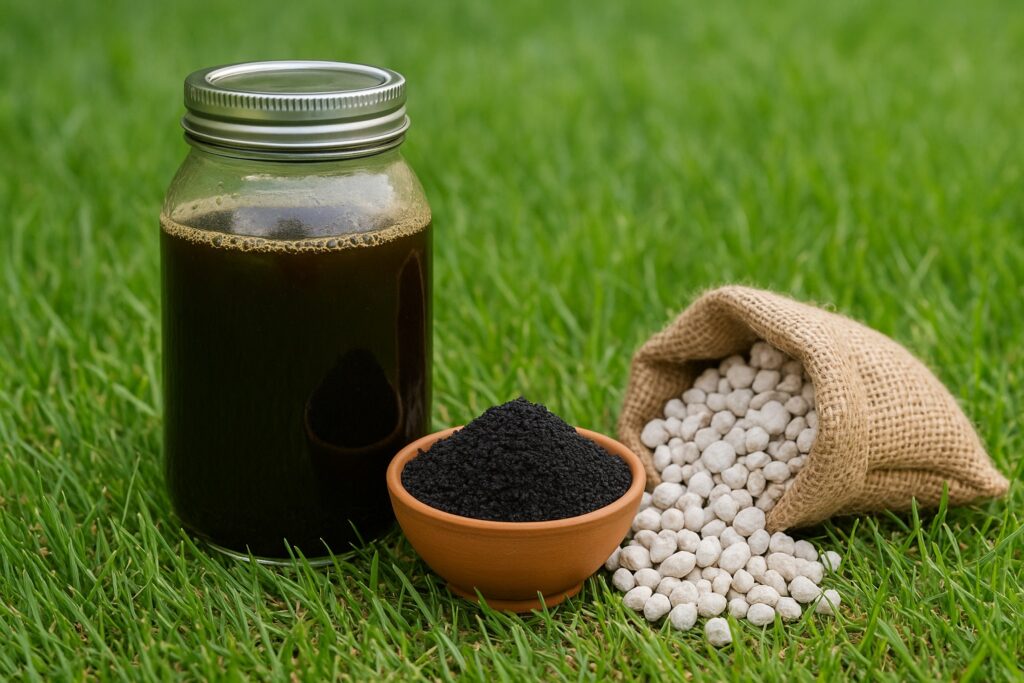
Unlike chemical additives that provide quick but temporary results, organic soil conditioners improve the structure, biology, and long-term fertility of the soil. Among the most effective natural options are compost tea, humic acid, and gypsum. These three work together to create a living, breathing soil system capable of sustaining lush, resilient turf with fewer synthetic inputs.
Let’s take a deep look at how each one works, why it matters, and how you can use them to transform your lawn from dull and lifeless to vibrant and self-sustaining.
Why Soil Conditioning Is the Key to a Healthy Lawn
Many homeowners think lawn care begins and ends with fertilizer. The truth is, fertilizing poor soil is like painting over a cracked wall—it hides the problem but doesn’t solve it. When soil is compacted or lacks structure, roots can’t spread, nutrients leach away quickly, and water either pools or evaporates before plants can absorb it.
Healthy soil, on the other hand, functions like a sponge and a filter combined. It retains just the right amount of moisture, allows oxygen to reach the roots, and supports billions of microorganisms that make nutrients available naturally.
By focusing on soil health, you set up a self-sustaining cycle:
- Microbes break down organic matter into nutrients.
- Roots grow deeper, improving water efficiency.
- Grass becomes denser and more resistant to stress.
This is why conditioning the soil—not just feeding the grass—should be the foundation of every lawn care routine.
1. Compost Tea – A Living Brew for Your Soil
What It Is
Compost tea is often called “liquid gold” for lawns and gardens. It’s created by steeping high-quality, mature compost in water—sometimes with added aeration and a small amount of molasses or kelp meal to stimulate microbial growth. The result is a nutrient-rich, microbe-dense solution that’s easy to apply and quick to absorb.
Why It Works
Compost tea reintroduces beneficial microorganisms into the soil—tiny helpers like bacteria, fungi, and protozoa that decompose organic material and release nutrients in forms that grass roots can actually use. Over time, these microbes rebuild the biological network that modern lawns often lose through over-fertilization, pesticide use, or soil compaction.
Key benefits include:
- Improved nutrient absorption and root strength
- Reduced dependency on chemical fertilizers
- Greater disease resistance through biological competition
- Enhanced soil texture and drainage
How to Use It
- Brew your tea: Mix one part compost with five parts water. If possible, use an aerated system with an air pump to keep oxygen flowing during brewing. Let it steep for 24–48 hours.
- Strain and apply: Filter the liquid and pour it into a garden sprayer.
- When to apply: Spray evenly over your lawn in early morning or late evening to prevent evaporation.
- Frequency: Apply every 4–6 weeks during the growing season for the best results.
Pro Tip:
Always use fully matured compost—unfinished compost can harbor harmful bacteria or cause nutrient imbalances. Compost tea should also be used within a few hours of brewing while microbial life is still active.
2. Humic Acid – The Hidden Power Behind Fertility
What It Is
Humic acid isn’t technically a fertilizer—it’s a powerful organic compound formed over centuries as plant and animal matter decomposes in the soil. Found in materials like leonardite shale or peat, humic acid is packed with carbon-based molecules that improve soil chemistry, nutrient retention, and microbial growth.
Why It Works
Humic acid acts as a natural chelator—binding nutrients such as iron, zinc, and calcium so that roots can absorb them more efficiently. It also enhances the soil’s cation exchange capacity (CEC), which determines how well soil holds and exchanges nutrients.
In practical terms, humic acid:
- Loosens compacted soil, allowing better air and water movement
- Strengthens root systems and boosts turf resilience
- Improves fertilizer efficiency (so you can use less)
- Encourages microbial life, especially fungi and actinomycetes that enrich the soil ecosystem
How to Apply It
- Liquid form: Mix according to label directions and spray evenly across your lawn. Water in lightly to help it penetrate the soil.
- Granular form: Spread using a broadcast spreader at about 2–4 ounces per 1,000 square feet.
- Best timing: Spring and fall applications yield the most noticeable results, particularly after aeration when soil pores are open.
Pro Tip:
Humic acid isn’t a replacement for compost or fertilizer—it’s a synergistic additive that amplifies their benefits. Pair it with compost tea for an even more powerful soil-conditioning effect.
3. Gypsum – The Soil Softener for Compacted Yards
What It Is
Gypsum, or calcium sulfate, is a naturally occurring mineral that’s been used for centuries to improve soil structure. While it doesn’t change pH like lime does, gypsum provides calcium and sulfur—two elements that enhance root growth and soil health.
Why It Works
Gypsum is especially effective for clay-heavy or compacted soils. The calcium in gypsum helps bind soil particles into larger aggregates, creating air pockets that improve drainage and allow roots to spread deeper. The sulfur component contributes to enzyme function and helps plants absorb other nutrients more efficiently.
Its key benefits include:
- Breaking up hard, compacted soil
- Improving drainage in heavy clay areas
- Reducing salt buildup (especially important near driveways or coastal areas)
- Supplying essential nutrients without altering soil pH
How to Use It
- Apply evenly: Use 20–30 pounds per 1,000 square feet for clay soils.
- Incorporate or water in: After spreading, lightly water to help it move into the root zone.
- Frequency: Once or twice a year is typically enough for most lawns.
Pro Tip:
If your lawn sits on sandy soil, skip gypsum—it won’t provide much structural benefit. Focus instead on organic matter like compost and humic acid for sandy soil improvement.
Combining Compost Tea, Humic Acid, and Gypsum
When used together, these three conditioners form a holistic soil-improvement system:
- Gypsum improves structure and drainage.
- Humic acid enhances nutrient availability and microbial activity.
- Compost tea repopulates beneficial microorganisms and boosts biological function.
A seasonal program might look like this:
- Spring: Aerate the soil → Apply gypsum → Follow with a compost tea drench.
- Summer: Use humic acid to maintain nutrient flow and reduce heat stress.
- Fall: Reapply compost tea to build winter resilience and strengthen root systems.
Over time, this trio can turn lifeless dirt into fertile, living soil capable of sustaining a thriving, low-maintenance lawn.
Expected Results and Timeline
- After 1–3 months: Improved color, better moisture balance, and stronger root growth.
- After 6–12 months: Less thatch buildup, deeper roots, and more drought tolerance.
- After a full year: Noticeable reduction in fertilizer and water needs, improved texture, and a consistent, rich green tone.
Lawn health improves gradually, but the long-term payoff is significant—once your soil ecosystem is thriving, your lawn practically takes care of itself.
Modern lawn care often overlooks the most important element: the soil itself. Compost tea, humic acid, and gypsum don’t just feed the grass—they rebuild the living system that keeps your lawn naturally vibrant and self-sustaining.
By conditioning your soil organically, you’re not just improving curb appeal; you’re investing in a healthier, more sustainable environment for years to come. Whether your lawn struggles with clay compaction, poor drainage, or nutrient loss, these natural conditioners can help restore its foundation—turning your yard into a lush, living carpet of green.
The written content on this page was generated by ChatGPT.

Comments