Every homeowner dreams of a lush, vibrant lawn, but few things can ruin that vision as quickly as lawn grubs. These small, white, C-shaped larvae lurk beneath the soil, quietly feeding on grassroots until patches of your yard begin to thin, turn brown, or die altogether. By the time you notice the damage, the problem is often widespread.
Many people turn to chemical insecticides for a quick fix, but these products come with trade-offs. They can harm pollinators, leach into waterways, and pose risks for children and pets. Fortunately, there’s another approach—one that works in harmony with nature rather than against it. That solution is the use of beneficial nematodes.
This guide breaks down everything you need to know about nematodes, why they’re so effective at grub control, and how to apply them correctly for lasting results.
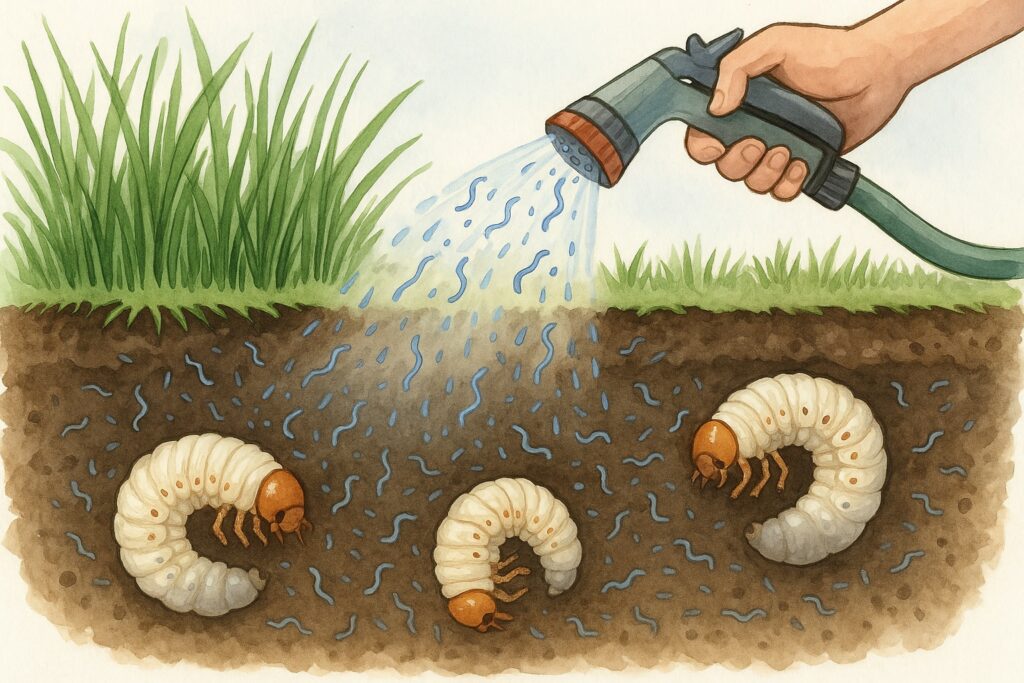
Understanding Beneficial Nematodes
Nematodes are microscopic roundworms found naturally in soils worldwide. While some nematodes can harm plants, others play an important role in keeping pest populations in check. The ones we’re focusing on here are the “beneficial” type—tiny hunters that actively seek out and kill destructive soil-dwelling insects.
The most effective nematodes for grub control include:
- Heterorhabditis bacteriophora (Hb) – Known for their aggressive ability to locate and destroy lawn grubs.
- Steinernema carpocapsae (Sc) – Often used against surface pests like cutworms and caterpillars.
- Steinernema feltiae (Sf) – Commonly applied in cooler soils, particularly against fungus gnat larvae.
Once nematodes invade a grub’s body through natural openings, they release symbiotic bacteria. Within 24 to 48 hours, the grub dies, providing food for the nematodes, which then multiply and continue the cycle.
Why Choose Nematodes Over Chemicals?
The idea of introducing microscopic worms into your soil may sound unusual, but it’s one of the most environmentally responsible choices you can make for your lawn.
- Environmentally Safe – They target pests specifically and don’t harm earthworms, pollinators, or beneficial microbes.
- Safe for Families and Pets – Unlike chemical pesticides, they leave no toxic residues behind.
- Sustainable Pest Control – Once established, nematodes can reproduce and keep working for months.
- Broad Spectrum Benefits – In addition to grubs, they can help control fleas, root weevils, and other soil pests.
For homeowners who want results without compromising soil health or safety, nematodes are a reliable, natural choice.
When Is the Best Time to Apply Them?
Timing is everything with grub control. Nematodes are most effective when grubs are young and actively feeding near the soil surface.
- Late Summer to Early Fall (August–October): This is considered the prime season in most regions. Grubs are small, vulnerable, and abundant at this stage.
- Spring (April–May): While application is possible, grubs are usually larger and harder to kill, so results may be less dramatic.
Temperature and moisture also play a role. Soil should be between 55°F and 85°F (13°C–29°C), and conditions should remain moist for at least a week after application.
Step-by-Step: How to Apply Beneficial Nematodes
Getting nematodes into your lawn is relatively simple, but proper technique makes all the difference.
1. Prepare Your Lawn
- Water your lawn thoroughly the day before application.
- Lightly dethatch if there’s a heavy barrier, so nematodes can penetrate the soil.
2. Mix the Nematodes
- They’re usually sold on a sponge or in powder form.
- Mix with cool, chlorine-free water (rainwater is ideal) following product directions.
- Keep the mixture shaded and out of direct sunlight—UV rays can kill nematodes.
3. Apply Them Evenly
- Use a hose-end sprayer, pump sprayer, or watering can.
- Shake or stir often, as nematodes settle quickly.
- Apply during the evening or on a cloudy day to avoid UV exposure.
4. Water Immediately After
- Irrigate the lawn with a light watering to wash nematodes into the root zone.
- Keep soil consistently moist for the next 7–10 days to help them establish.
Practical Tips for Success
- Skip Chemicals: Avoid applying chemical insecticides for at least two weeks before and after using nematodes.
- Storage: If you don’t use them right away, keep nematodes refrigerated. They are living organisms, not shelf-stable products.
- Patience Pays Off: While some reduction in grub damage can be seen within weeks, the real benefits show the following season when fewer beetles emerge to lay eggs.
How to Know They’re Working
Unlike chemical sprays, you won’t see instant results. However, signs of success include:
- A noticeable reduction in brown lawn patches.
- Grass growing back thicker and healthier.
- Fewer adult beetles present the next summer.
In most cases, applying nematodes two years in a row creates a lasting population in your soil, providing natural grub control for seasons to come.
Where to Find Beneficial Nematodes
Garden centers and online retailers carry them in refrigerated packs. Trusted suppliers include:
- NemaSeek Hb – Highly effective against grubs.
- NemaGlobe – General pest control applications.
- Arbico Organics – Offers multiple nematode species depending on your needs.
Always check the label to ensure you’re getting the right species for your specific pest problem.
Grubs are one of the most frustrating lawn pests, but reaching for chemicals isn’t the only option. Beneficial nematodes offer a safe, eco-friendly, and highly effective way to control them naturally. By applying them at the right time, under the right conditions, you not only protect your grass but also support a healthier soil ecosystem.
For homeowners committed to organic lawn care, nematodes are more than just a treatment—they’re a long-term investment in sustainable lawn health.
The written content on this page was generated by ChatGPT.

Comments