Most homeowners think of lawn care in terms of mowing, watering, and fertilizing. But beneath the surface—literally—there’s an underground network that can transform the way your lawn grows and thrives. This living web, formed by mycorrhizal fungi, operates quietly in the soil, helping your grass grow stronger, greener, and more resilient with less need for synthetic treatments.
Although the concept may sound like something out of a biology textbook, mycorrhizal fungi have been partnering with plants for over 400 million years. Now, thanks to modern lawn care knowledge, homeowners can leverage this age-old relationship to boost lawn health naturally.
Let’s take a closer look at what mycorrhizal fungi are, why your lawn needs them, and how to apply them effectively for long-term results.
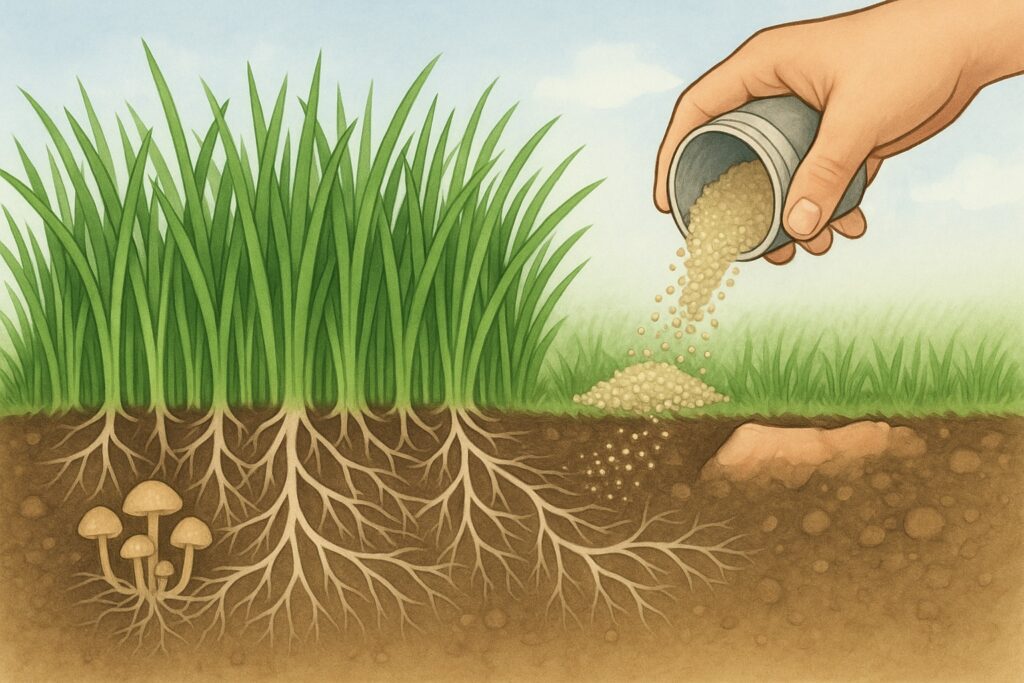
Understanding the Role of Mycorrhizal Fungi in Lawn Ecosystems
To put it simply, mycorrhizal fungi are microscopic organisms that bond with plant roots. Once they connect, they grow thread-like structures called hyphae that extend deep into the soil. These structures work like an expanded root system, pulling in water and nutrients far beyond the reach of your grass’s natural roots.
There are two broad types: ectomycorrhizal and endomycorrhizal fungi. The former mostly benefits trees, while the latter—arbuscular mycorrhizae—form partnerships with turfgrass and most common plants found in your yard.
This underground alliance is mutually beneficial: the fungi receive carbohydrates from the grass, while the grass gains access to minerals and moisture that would otherwise remain unavailable.
What Benefits Do Mycorrhizal Fungi Provide to Lawns?
You might be wondering why this matters when you already fertilize or irrigate your lawn. The truth is, most lawns are lacking this natural fungal support system, especially in urban and suburban environments where soil is often compacted, chemically treated, or stripped of organic life during development.
Here’s what mycorrhizal fungi can offer your lawn:
1. Superior Nutrient Absorption
The hyphae extend much farther than the roots themselves, accessing phosphorus, nitrogen, and micronutrients locked in the soil. This makes your fertilization efforts more effective and reduces waste runoff.
2. Better Drought Tolerance
Because the fungi help grass access deep pockets of moisture, lawns treated with mycorrhizae typically perform better during dry spells.
3. Thicker, Stronger Roots
Over time, lawns colonized by these fungi develop more fibrous and extensive root systems. This results in fuller turf coverage and less susceptibility to erosion or disease.
4. Reduced Need for Chemicals
With improved nutrient and water absorption, you may find yourself using fewer synthetic fertilizers or pesticides. This makes your lawn healthier for pets, kids, and the environment.
5. Improved Soil Structure
Mycorrhizal fungi release compounds that help bind soil particles together, improving aeration, drainage, and resistance to compaction.
When and How to Apply Mycorrhizal Fungi to Your Lawn
Timing and technique are both important when introducing mycorrhizal fungi into your lawn. Here’s how to get the most out of your application:
Start with the Right Product
You want a product specifically designed for turf or lawn grasses, which includes endo-mycorrhizal fungi like Glomus intraradices or Rhizophagus irregularis. These come in several forms:
- Granules – Easy to spread with a broadcast or drop spreader
- Powder – Often mixed with seed or starter soil
- Liquid concentrate – Best for spot treatments or hose-end sprayers
Be sure to purchase from reputable brands that guarantee living spores, not just additives. Labels should include the number of propagules (living units) per gram.
Apply During Seeding or Aeration
If you’re installing a new lawn, this is the ideal time to apply mycorrhizal fungi. Mix the inoculant with grass seed or apply it directly to the soil before laying sod.
For existing lawns, the most effective method is to aerate first, then apply the fungi. Aeration opens up the soil, allowing spores to make direct contact with roots.
Water Lightly After Application
Moisture is critical for fungal spores to activate and attach to root hairs. After application, give your lawn a light watering to help the fungi settle in.
Avoid Chemical Fertilizers Immediately After
Many synthetic fertilizers, especially those high in phosphorus, can inhibit the establishment of fungal colonies. For best results, wait a few weeks before applying any chemical products, or use organic fertilizers with low phosphorus content.
How Long Until You See Results?
Patience is part of the process. Mycorrhizal fungi are not a quick-fix solution. Expect visible improvements in lawn thickness, color, and resilience over the course of 4–8 weeks, especially during the active growing season.
However, the real benefits accumulate over time. Lawns treated annually with mycorrhizal fungi tend to perform better in stressful conditions—like summer heat, foot traffic, or poor soil—compared to untreated turf.
Combining Fungi with Other Natural Lawn Treatments
One of the best things about mycorrhizal fungi is how well they integrate into an organic lawn care system. You can safely combine them with:
- Compost applications
- Humic and fulvic acids
- Liquid seaweed/kelp foliar sprays
- Organic fertilizers like alfalfa meal or feather meal
Avoid using fungicides or weed killers around the time of application, as these can suppress fungal activity.
Where to Buy Mycorrhizal Fungi for Lawn Use
Fortunately, as interest in organic and regenerative lawn care grows, mycorrhizal inoculants are more widely available. You can find quality products online and at local garden centers. Some well-regarded brands include:
- MycoApply® Turf
- BioOrganics™ Mycorrhizal Inoculant
- Xtreme Gardening Mykos®
- Arbico Organics
Be sure to check expiration dates and verify that the product is formulated for turfgrass.
Rebuilding Life Beneath Your Lawn
There’s a saying among soil experts: “Healthy lawns start underground.” That couldn’t be more true when it comes to mycorrhizal fungi. By reintroducing these beneficial organisms into your lawn, you’re not just treating symptoms—you’re solving problems at the root level.
If you’re looking to reduce chemical inputs, improve your soil, and support a thriving lawn ecosystem, mycorrhizal fungi are a natural and effective solution worth adding to your lawn care routine.
The written content on this page was generated by ChatGPT.

Comments